Shunyata · Digital Cables · Cables
GAMMA AES/EBU
Twin-axial AES/EBU cable with tinned OCC copper conductors, fluorocarbon dielectric, foil shielding, and 110 ohm impedance.
fig. 01 · digital cables
GAMMA AES/EBU
DI-GAM-AES-100
current
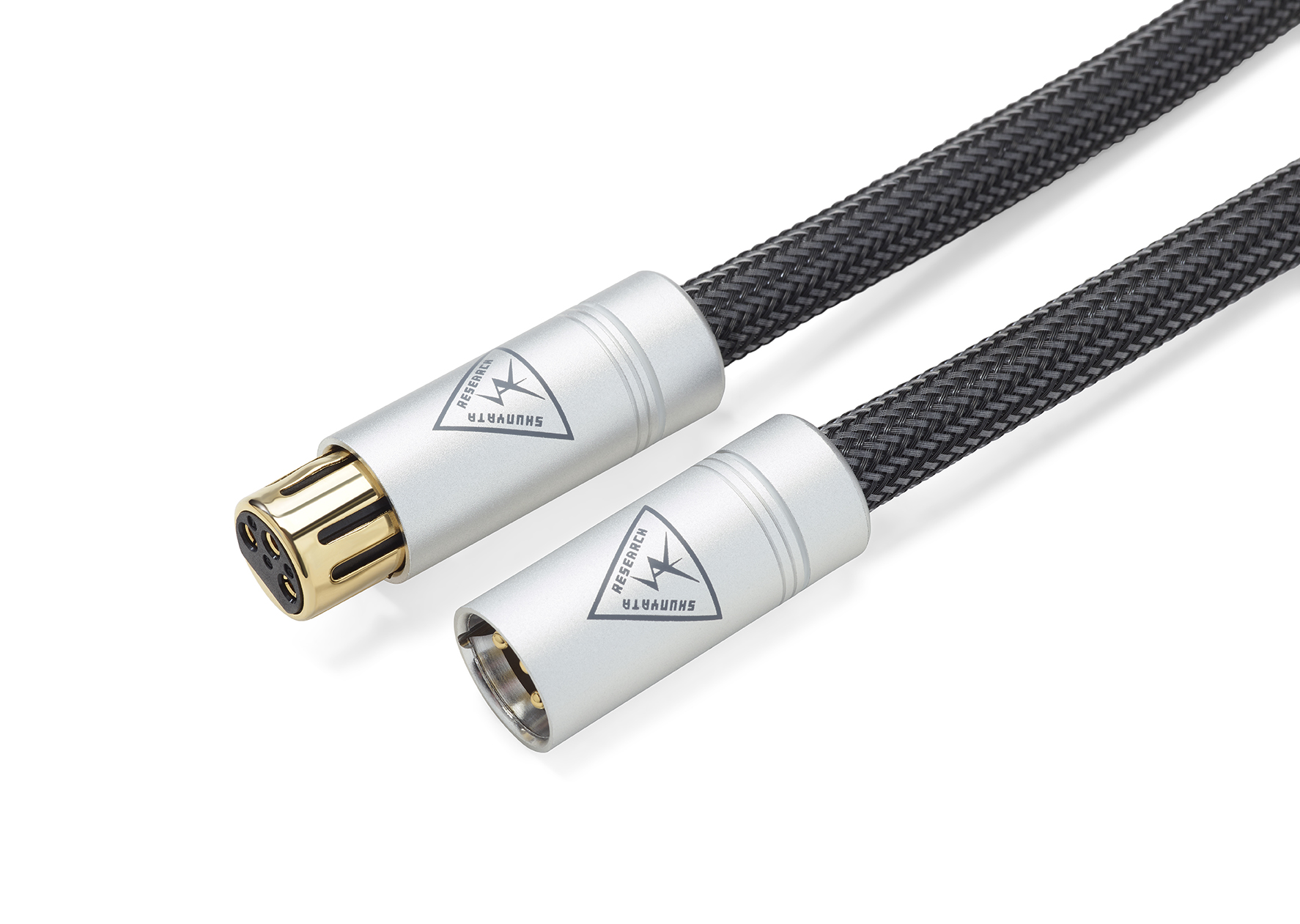
From Shunyata
GAMMA AES/EBU uses twin-axial geometry with tinned OCC copper conductors, fluorocarbon dielectric, and a 100 percent coverage foil shield. The saved specs list 18-gauge construction, gold-plated brass contacts with a nickel matte finish, 110 ohm characteristic impedance, 4 days of KPIP v2 processing, and a 1.00 m standard length.
Specifications
| PURITY IN TONE. DYNAMIC BY NATURE. | PURITY IN TONE. DYNAMIC BY NATURE. |
|---|---|
| Ohno | wire, also called PCOCC was invented in 1986 by professor Atsumi Ohno of the Chiba Institute of Technology in Japan. Copper wire is created by an extrusion process that pulls a rod of cold copper through a small orifice which creates multiple crystalline boundaries. By contrast, Ohno wire is made by a process using heated molds that cast a wire to form a single crystalline structure. Ohno wire is well known for its exceptionally pure, grain-free sonic qualities. |
| Fluorocarbon dielectrics | Fluorocarbon dielectrics are usually only found in wire used in the aerospace industry, satellites and only the most expensive audiophile cabling. It has special electrical characteristics; very low dielectric absorption, high dielectric strength and exceptional heat resistance. When used in audio and power cables is reduces the perception of dynamic compression and it improves sonic low-level resolution and clarity. |
| Cable Type | Twin axial geometry |
| Conductors | OCC (Ohno Continuous Cast) copper (tinned) |
| Shield | 100% coverage foil shield |
| Dielectric | Fluorocarbon |
| Connectors | Gold plated brass contacts, nickel matte finish |
| Characteristic Impedance | 110 ohm |
| Gauge | 18 |
| Color | Charcoal Flex |
| KPIP v2 Processing | 4-days |
| Standard Length | 1.00 meters |
| Safety Assurance | Safety Assurance: Continuity and polarity tests – by two technicians HiPOT tests insulation breakdown @ 1,200 VAC |