Shunyata · Digital Cables · Cables
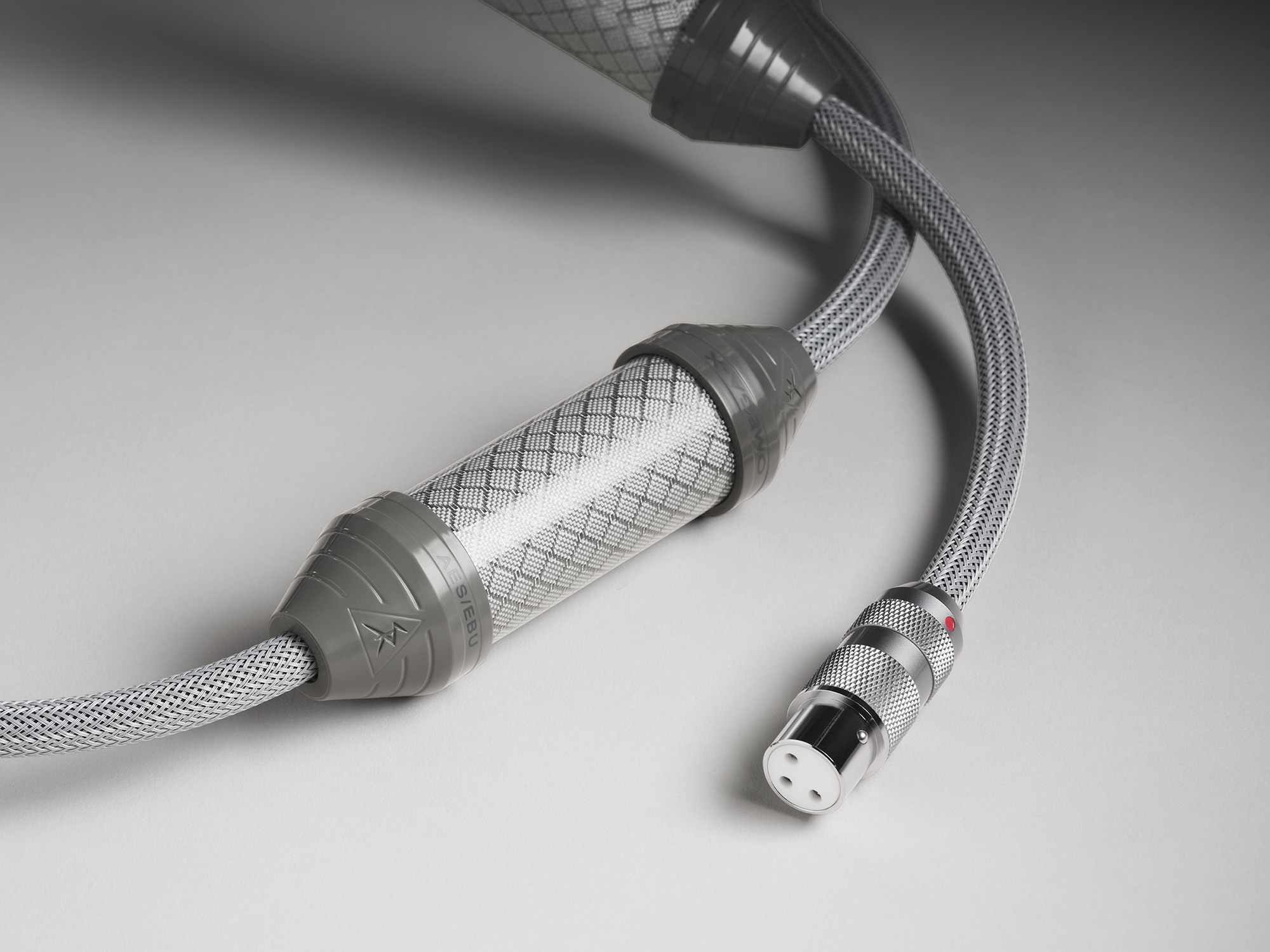
OMEGA-X AES | S/PDIF | Clock
Digital interconnect platform for AES, S/PDIF, and clock links with TAPc, PMZ, and CMode filtering.
fig. 01 · digital cables
OMEGA-X AES | S/PDIF | Clock
OMGX-DI
current
From Shunyata
Omega-X AES | S/PDIF | Clock covers multiple digital formats: S/PDIF and clock versions use coaxial construction with SPC conductors and braided shields, while AES uses twinaxial construction with OCC copper and foil shielding. The saved specs list 50 TAPc elements, triple-element CMode filtering, PMZ on S/PDIF and clock variants, 8 days of KPIP v2 processing, and 50, 75, or 110 ohm impedance by format.
Specifications
| TAPc | (Transverse Axial Polarizer) is a patent-pending technology that couples to the electromagnetic fields surrounding electrical or signal conductors. TAPc behaves like a polarizer, passively reducing electromagnetic distortion that presents as a type of glare on sound or images. | 50 elements |
|---|---|
| KPIP v2 Processing | Shunyata Research’s proprietary Kinetic Phase Inversion Process includes four days of continuous KPIP v2™ processing which refines conductor metals at the atomic level. This dramatically reduces burn-in time and significantly improves sonic performance, delivering a relaxed and life-like presentation. When compared to the original process, KPIP v2™ represents a dramatic performance upgrade on par with a component-level upgrade. | 8-days |
| Precision Matched Z | Shunyata Research digital cables are produced using a (PMZ) concept. This means that tolerances of the conductor surface, dielectric extrusion, and the precision of the braided shield are held to minute variances. To achieve these tight tolerances, the extrusion and braiding machines must be run at one-quarter speed during the manufacturing process. The result is better performance through a reduction of cable-induced ‘signal jitter’. (Note: Z means impedance) | S/PDIF, Clock-50, Clock-75 |
| Common-mode noise | is different than differential noise and is much more difficult to measure and eliminate. For the purest signal possible, Shunyata Research has developed a CMode filter that effectively reduces common-mode noise without introducing the sonic compression effects associated with conventional filters. It reduces high-frequency noise distortion while delivering an analog ease and palpable background silence that closes the gap between digital and analog systems. | triple element |
| Cable Type | S/PDIF, Clock-50, Clock-75: coaxial AES: twinaxial |
| Conductors | S/PDIF, Clock-50, Clock-75: SPC AES: OCC copper |
| Shield | Shield: S/PDIF, Clock-50, Clock-75: SPC 100% braided shield AES: 100% foil shield |
| Dielectric | AES: fluorocarbon S/PDIF, Clock-50, Clock-75: PTFE |
| Connectors | S/PDIF, AES: Gold/Copper contacts, black chrome finish Clock-50, Clock-75: BNC |
| Characteristic Impedance (ohm) | Characteristic Impedance (ohm): S/PDIF: 75 AES: 110 Clock-50: 50 Clock-75: 75 |
| Standard Length | 1.25 meters |
| Color | gray flex |
| Safety Assurance | Safety Assurance: Continuity and polarity tests – by two technicians HiPOT tests insulation breakdown @ 1,200 VAC |